SPF 30 vs SPF 50: the real protection difference
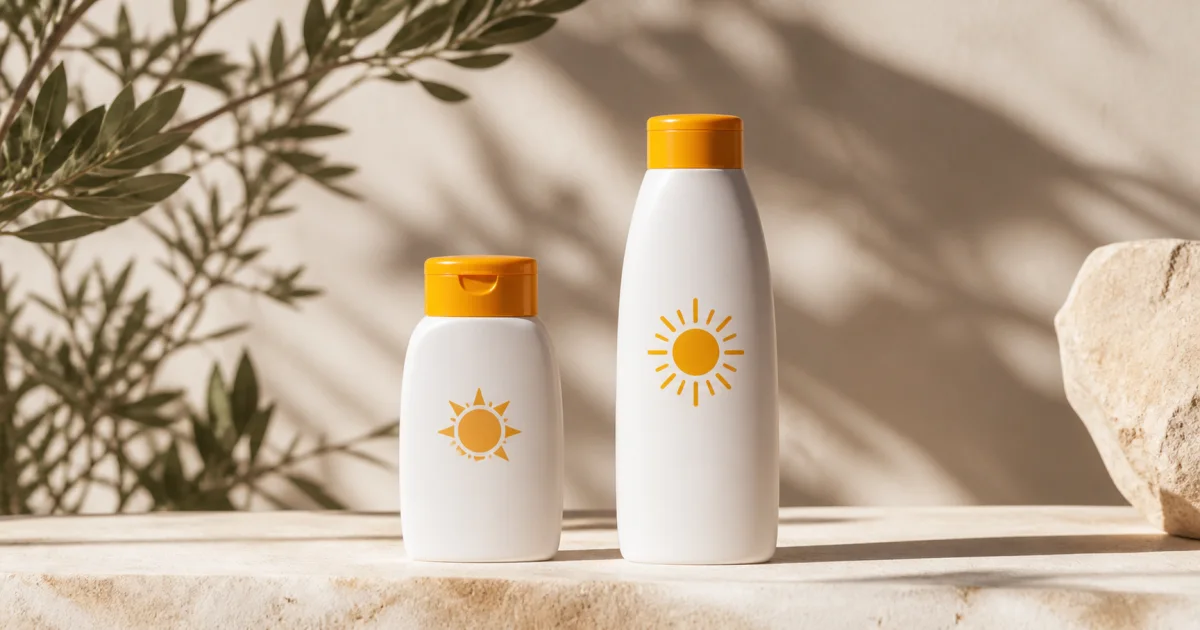
SPF 30 vs SPF 50 is a comparison of tested UVB protection, not a complete score for a sunscreen. SPF does not by itself state UVA protection, comfort, water resistance or how much product someone will actually apply.
TL;DR: In a simplified label-dose UVB calculation, SPF 30 corresponds to about 3.3 percent UVB transmission and SPF 50 to about 2 percent. This does not mean either product blocks every harmful wavelength, and it does not predict protection after under-application. Choose a broad-spectrum product, follow its directions, combine it with shade and clothing, and reapply during exposure.
What the SPF number measures
The ISO 24444 test method determines SPF from the ratio between the ultraviolet dose that produces erythema on protected skin and the dose that produces erythema on unprotected skin. Products are tested under controlled conditions at a specified application dose. SPF is therefore a laboratory measure centred on sunburn-producing radiation, predominantly UVB.
The familiar percentage figures come from a simplified interpretation of that ratio:
- SPF 30:
1 / 30, or about 3.3 percent, transmitted; about 96.7 percent filtered. - SPF 50:
1 / 50, or 2 percent, transmitted; about 98 percent filtered.
At the same tested dose, 2 percent is about 40 percent less than 3.3 percent. That relative comparison is mathematically correct, but it applies to the SPF test result. It must not be extended to UVA, lifetime cancer risk, dermal energy or a person's real-world protection without separate evidence.
Why application matters more than a shortcut formula
The label result depends on applying the product as tested and maintaining the protective film. Using less product, missing areas, rubbing it off, sweating or swimming can reduce protection. There is no reliable consumer shortcut that turns “half the amount” into one universal effective SPF, because formulas and film formation differ.
The FDA's sunscreen guidance advises using enough to cover exposed skin, applying before exposure and reapplying at least every two hours, or more often when swimming or sweating. It also recommends sunscreen alongside shade, protective clothing, a hat and sunglasses.
For an average-size adult covering the exposed body, the FDA gives one ounce as a practical amount. Face-only teaspoon rules vary with surface area and product, so the safest instruction is to follow the specific label and apply an even, complete layer rather than chase an invented universal face dose.
SPF is not UVA protection
UVA contributes to skin damage but is not described by the SPF number alone. In the EU, the European Commission recommendation on sunscreen efficacy and claims says UVA protection should be at least one third of the labelled SPF and recommends a critical wavelength of 370 nm. The UVA circle on an EU product communicates that proportional requirement; other markets use different broad-spectrum systems.
That means two SPF 50 products can differ in filters, finish and labelled UVA information. Compare like with like: check broad-spectrum or UVA labelling, water-resistance directions when relevant, and the instructions for use. Our EU versus US sunscreen guide explains the regulatory systems without treating one SPF number as the whole formulation.
How to choose between SPF 30 and SPF 50
Both numbers can appear on properly tested broad-spectrum products. The American Academy of Dermatology sunscreen statement recommends a broad-spectrum, water-resistant sunscreen with SPF 30 or higher. SPF 50 provides a higher tested UVB factor than SPF 30; neither compensates for missed areas or failure to reapply.
A practical choice considers:
- the level and duration of expected exposure;
- broad-spectrum or UVA labelling;
- water resistance for swimming or sweating;
- a texture you can apply evenly and in the labelled amount;
- advice from a clinician when a disease, treatment or medicine changes your photosensitivity risk.
Do not infer photosensitivity from an ingredient list alone. If a prescription or its leaflet calls for sun precautions, follow that instruction and ask the prescriber when uncertain.
Reapplication and makeup
During outdoor exposure, reapply according to the label and after swimming, sweating or towel drying. A powder, mist or makeup product should not be assumed to recreate the tested layer unless it is itself a sunscreen and you apply the labelled amount evenly. Makeup with an SPF claim is tested as a finished product, but a very thin cosmetic application may not match its test conditions.
Do not mix two sunscreens together in your hand to create an “average SPF.” Mixing can alter the film. If layering products, let each layer form as directed and do not add the two SPF numbers. Our sunscreen reminder guide focuses on practical prompts during actual exposure.
Common SPF 30 vs SPF 50 questions
Is SPF 50 twice as strong as SPF 30?
No. In the simplified label-dose UVB calculation, SPF 30 corresponds to about 3.3 percent transmission and SPF 50 to 2 percent. The difference is 1.3 percentage points of filtered UVB, or about 40 percent less transmitted UVB at the same test conditions.
Does SPF 100 mean complete protection?
No sunscreen provides complete protection. The European Commission recommendation explicitly warns against claims such as “100 percent protection” or “sunblock,” and the FDA advises combining sunscreen with other sun-protective measures.
Why do EU labels use SPF 50+?
The Commission recommendation groups labelled protection into categories, with 50+ as the highest category. This standardises consumer communication; it does not mean a product blocks all ultraviolet radiation.
Is SPF 30 enough indoors?
There is no universal indoor rule. Exposure depends on distance from windows, glazing, time of day and time spent outside. Choose protection for the exposure you actually expect and seek clinical advice if you have a condition or treatment that requires specific photoprotection.
Can tinted sunscreen help with pigmentation concerns?
Tinted products may include pigments that affect visible-light transmission, but that property is separate from the SPF number. Our tinted sunscreen evidence review separates the visible-light evidence from UVB label math.
Bottom line. SPF 50 has a higher tested UVB factor than SPF 30, but product choice is only one part of protection. Broad-spectrum coverage, adequate application, reapplication and other sun-protective measures determine whether the label can translate into useful protection.
Sources
Enjoyed this? Share it