Best tinted SPF for hyperpigmentation: iron oxide
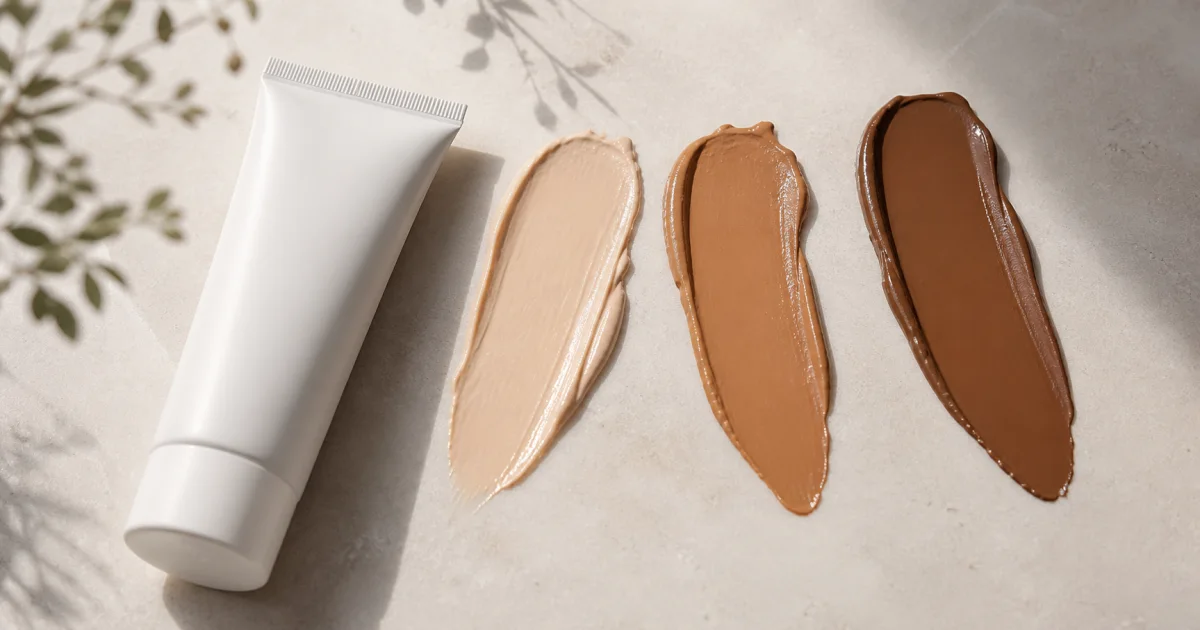
For hyperpigmentation affected by sunlight, a well-formulated tinted broad-spectrum sunscreen can add visible-light attenuation to ultraviolet protection. Iron oxides are common studied pigments, but they are not an automatic guarantee and they are not the only pigment discussed in the literature: pigmentary titanium dioxide also appears in tinted formulations. The useful question is how the finished product performs and whether you can apply it evenly, not whether one ingredient name appears on the label.
TL;DR: Visible light (400 to 700 nanometres) can contribute to pigmentation, particularly in melasma and darker phototypes. The cited review reports that common clear broad-spectrum sunscreens do not adequately protect against visible light, while tinted formulas use different amounts of iron oxides and pigmentary titanium dioxide. Choose a broad-spectrum, water-resistant SPF 30 or higher that you can apply in an even layer. Follow its label, and reapply approximately every two hours when outdoors and after swimming or sweating.
Why hyperpigmentation needs more than a standard SPF
Ultraviolet protection remains essential, but the SPF number does not quantify visible-light attenuation. For conditions in which visible light contributes to pigmentation, a product selected only by SPF may leave that separate question unanswered.
SPF primarily describes protection against ultraviolet B, while a broad-spectrum claim adds ultraviolet A protection. Neither claim, by itself, states how much visible light the finished formula attenuates. Experimental responses vary by phototype, and individual advice should also consider the condition being treated rather than skin tone alone.
How iron oxides block visible light
Iron oxides can contribute to visible-light attenuation when they are dispersed at suitable concentrations in a finished formula. Yellow, red and black iron oxides are also used as cosmetic colourants, and manufacturers combine them in different ratios to create shades.
The 2021 review Photoprotection beyond ultraviolet radiation: a review of tinted sunscreens reports that common nanoparticle mineral sunscreens do not adequately protect against visible light and describes tinted sunscreens formulated with different concentrations of iron oxides and pigmentary titanium dioxide. That supports evaluating the finished tint rather than treating “mineral,” “chemical” or one pigment name as a performance result.
This is separate from the chemical-versus-mineral filter debate. Both filter types can provide ultraviolet protection, a comparison covered in our guide to chemical vs mineral sunscreen. Visible-light performance depends on the complete tinted formulation; it cannot be inferred from the ultraviolet filter category alone.
What the melasma trials actually show
Clinical trials support some tinted, visible-light-attenuating formulations in defined melasma settings. They do not prove that every tinted product, every iron-oxide concentration or every shade performs the same way.
In a 2014 double-blind randomized study, Near-visible light and UV photoprotection in the treatment of melasma, 68 patients with melasma used 4 percent hydroquinone for eight weeks alongside one of two SPF 50-or-higher sunscreens. The group assigned the iron-oxide-containing, visible-light-protective formula had better measured outcomes than the ultraviolet-only formula. This supports that studied regimen; it does not establish an ingredient-only threshold or predict the result of an untested commercial tint.
A companion 2015 randomized trial, Prevention of melasma relapses with sunscreen combining protection against UV and short wavelengths of visible light, found less relapse with the studied ultraviolet-plus-visible-light formula than with the ultraviolet-only comparator during follow-up. Again, the evidence belongs to those tested formulations and study conditions.
A 2010 mechanistic study, Impact of long-wavelength UVA and visible light on melanocompetent skin, exposed the backs of 20 volunteers with skin types IV to VI to visible light and long-wavelength ultraviolet A and reported darker, more sustained pigmentation after the visible-light exposure. Its type II comparison did not show the same pigmentation response. This small experimental sample supports phototype-dependent differences under its protocol; it does not reduce an individual's risk or treatment needs to melanin level alone.
Tinted vs untinted mineral SPF for dark spots
For visible-light-responsive hyperpigmentation, the studied tinted formulations may add a useful layer beyond an ultraviolet rating. “Tinted” still does not function as a standardised visible-light protection score.
An untinted broad-spectrum sunscreen still provides important ultraviolet protection, but its SPF and broad-spectrum claims do not quantify visible-light attenuation. Texture and wearability matter because an uneven or rarely used sunscreen will not match its labelled test conditions. Our roundup of the best sunscreen for oily skin discusses those practical trade-offs.
When melasma or post-inflammatory hyperpigmentation is the concern, consider a tinted option that is comfortable enough for even use and discuss recurrent or treatment-resistant pigment with a clinician. Our guides to serums for hyperpigmentation and dark spots and melasma skincare actives explain the separate role of treatment products.
How to choose the best tinted SPF for hyperpigmentation
Start with broad-spectrum, water-resistant SPF 30 or higher, a tint you can apply evenly and label directions you can realistically follow. For visible-light-responsive pigment, look for iron oxides or pigmentary titanium dioxide and, where available, finished-formula visible-light testing.
Read the label, but do not overread it. Iron oxides may appear as CI 77491, CI 77492 and CI 77499, and pigmentary titanium dioxide may also contribute. The ingredient list alone does not quantify visible-light protection: pigment concentration, dispersion, shade and the complete formula affect transmission. A specific visible-light test is stronger evidence than the word “tinted” by itself.
Keep ultraviolet protection in the decision. The American Academy of Dermatology sunscreen guidance recommends broad-spectrum, water-resistant SPF 30 or higher. The melasma trials above used SPF 50-or-higher comparators, but they do not establish SPF 50 as a universal treatment prescription.
Choose a wearable shade. A close shade match can make even application more practical. Do not assume every shade in a range has identical visible-light transmission unless the finished products were tested; pigment ratios may differ.
How to apply tinted SPF so it actually protects pigment
Apply an even, continuous layer using the amount and method on the product label. Sunscreen efficacy testing uses a controlled application amount, but translating it into one household measure for every face, neck and formulation is imprecise.
Coverage should be even across exposed skin, without relying on colour intensity as a dose meter. How visible a tint looks depends on shade match and formulation, so a “faint veil” does not prove that the labelled amount was reached.
Reapply approximately every two hours when outdoors. Reapply after swimming or sweating and follow the directions on the product label, including any water-resistance interval. For indoor days, exposure varies with proximity to windows and time outside; there is no evidence-based universal clock in this article. Screens are not a reason to replace outdoor sun-protection guidance. See our hyperpigmentation treatment guide for the separate treatment question.
The three formats of tinted SPF, and who each one suits
Tinted sunscreens come in several formats. The format name does not establish how much product reaches the skin or how the finished layer performs.
Tinted fluids and lotions may be easier to spread into a continuous layer. Choose texture and shade by comfort, and use only claims supported on the current label.
Tinted creams may feel richer, but thickness or a more visible finish is not itself a measured visible-light protection value. Apply according to the labelled directions.
Powders and sticks should not be assumed to restore the labelled protection simply because they contain iron oxides or display an SPF. If a stick is the sunscreen, follow its specific directions carefully and cover every area. A cosmetic powder dusted over makeup is not a proven substitute for reapplying a labelled sunscreen at its tested amount.
When reapplication over makeup is difficult, use shade, a hat and other protective clothing while outdoors, or choose a sunscreen format you can reapply according to its label. Convenience does not verify dose.
Building tinted SPF into a full pigment routine
Tinted sunscreen is one possible photoprotection step, not a treatment for established pigment and not a substitute for shade or protective clothing. Whether a separate treatment is appropriate depends on the diagnosis, formula, tolerance and clinical advice.
Follow the sunscreen label for application over or under other products and allow each layer to settle so the sunscreen can form an even film. A separate serum is optional; this article does not cite a finished-routine trial proving that every antioxidant product improves the sunscreen's result.
Retinoids, azelaic acid and tranexamic acid have different indications, evidence and safety considerations; listing them does not create a universal night routine. Use treatment products according to their label or a clinician's plan, and do not infer that a tinted sunscreen guarantees that pigment will fade.
Common mistakes that keep dark spots coming back
SPF remains important for ultraviolet protection, but a higher SPF number alone does not describe visible-light attenuation. For melasma, evaluate ultraviolet protection, visible-light evidence, wearability and the rest of the care plan rather than treating one number as a complete pigment score.
Do not assume that “mineral” automatically means visible-light protection. The cited review found inadequate visible-light protection from the common nanoparticle mineral formulas it assessed; the relevant evidence is the finished formulation, not the category name.
A third mistake is turning a context-specific melasma study into an absolute indoor schedule. Use sun protection for actual exposure, including time outdoors and relevant window exposure, and follow individual medical advice for a diagnosed photosensitive condition.
Sun protection and treatment have different roles. A sunscreen does not replace assessment or treatment of persistent pigment, and a treatment active does not replace broad-spectrum protection during exposure.
Frequently asked questions
Does a tinted moisturizer count as tinted SPF for hyperpigmentation? It can count as sunscreen only when it is labelled broad-spectrum SPF 30 or higher and is applied and reapplied according to its sunscreen directions. Iron oxides may indicate a visible-light pigment, but the ingredient list alone does not quantify protection. Do not assume a cosmetic layer worn below the labelled amount is an adequate top-up.
Can I get visible light protection from a clear sunscreen if the SPF is high enough? SPF does not measure visible-light protection. The 2021 review reports inadequate visible-light protection from common clear broad-spectrum and nanoparticle mineral formulas, but ultraviolet protection remains essential. Look for a suitable tinted formula and finished-product evidence rather than inferring visible-light performance from SPF alone.
Do I still need tinted SPF if I have fair skin? The 2010 experimental study found a different pigmentation response in its type II group than in types IV to VI, but one study does not decide an individual's sunscreen needs. Broad-spectrum protection applies across skin tones; discuss melasma or a diagnosed light-triggered condition with a clinician.
How much extra improvement does the iron oxide version actually give? The eight-week melasma trial reported better severity and colour measurements in the group assigned the visible-light-protective formula while both groups also used hydroquinone. Those group results apply to the studied regimen and should not be used to forecast an individual outcome or an untested product.
Can iron oxides irritate sensitive or acne-prone skin? Tolerance depends on the whole formula, not the pigment alone. Check the complete ingredient list, patch test as directed if you have reacted to cosmetics before, and stop if irritation occurs. A dermatologist can help when acne, rosacea or allergy complicates product selection.
Is a tinted sunscreen enough on its own to fade existing dark spots? No sunscreen should be presented as a treatment that fades established spots. A suitable tinted sunscreen may contribute to photoprotection during exposure, while persistent or changing pigmentation may need a diagnosis and an individual treatment plan.
Enjoyed this? Share it