Eczema barrier care: ceramides, oats and evidence
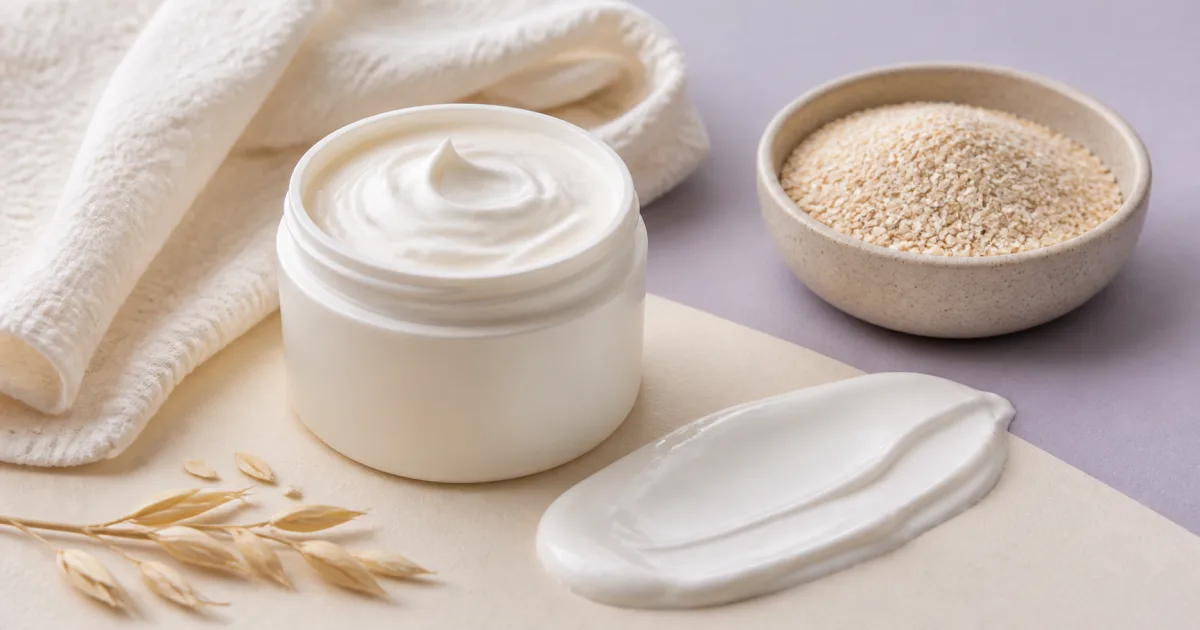
An eczema barrier repair routine should be simple enough to repeat and flexible enough to match the person. Atopic dermatitis involves both skin-barrier dysfunction and inflammation. Moisturizers can support the barrier and reduce dryness, while active flares may need treatment chosen with a clinician.
In brief: Use a fragrance-free moisturizer that you tolerate, wash briefly with lukewarm water, avoid known triggers and follow the treatment plan for flares. Ceramides and colloidal oatmeal are optional formulation features; neither ingredient name proves that a product will work for every person or every age.
Start With The Guideline-Level Evidence
The American Academy of Dermatology's updated atopic dermatitis guidelines for topical therapies strongly recommend moisturizers as part of adult care. The same update covers topical corticosteroids, calcineurin inhibitors, PDE-4 and JAK inhibitors, and conditional use of bathing and wet-wrap approaches.
That distinction matters. A cosmetic routine can improve comfort and reduce dryness, but it should not be presented as a cure or as a substitute for prescribed anti-inflammatory treatment. Widespread, painful, oozing or infected-looking skin needs medical assessment. So does eczema that disrupts sleep or does not improve with an established plan.
Choosing A Moisturizer
Ointments, creams and lotions differ mainly in their balance of oil, water and other ingredients. Ointments are more occlusive; creams may feel easier to use during the day; lotions spread easily but can be less occlusive. The useful product is one that can be applied regularly without persistent stinging or a disliked texture.
Look for a short, fragrance-free formula when fragrance has been a trigger. “Unscented” is not always the same as fragrance-free; the fragrance-allergen guide explains the label distinction and common sensitizer context. Avoid introducing several new products at once during a flare, because that makes a reaction harder to trace.
Apply moisturizer according to the product directions and the care plan. Many people find it practical to apply after washing while the skin is still slightly damp, but comfort and clinician advice take priority.
Ceramides: Relevant, Not Automatically Superior
Ceramides are lipids found naturally in the outer skin barrier. Formulators use ceramides, cholesterol, fatty acids and occlusive ingredients in different combinations. A product that contains ceramides may be useful, but the front-label word alone does not reveal the concentration, ratio, stability or performance of the finished formula.
Current guideline support is strongest for regular moisturizer use as a category. It does not establish that every ceramide cream outperforms a well-tolerated plain ointment or other moisturizer for every patient. The ceramide barrier guide provides ingredient context without replacing finished-product tolerance. Cost, texture, contact allergy and willingness to reapply are legitimate selection factors.
Colloidal Oatmeal: What Its Regulatory Status Means
The FDA's Skin Protectant Drug Products monograph lists colloidal oatmeal as an active ingredient for specified over-the-counter skin-protectant uses and concentrations.
That regulatory status defines allowed labeling under the monograph. It does not establish that every oatmeal cosmetic treats atopic dermatitis, that oatmeal is superior to every other moisturizer, or that one product is appropriate at every age. Follow the exact label, including age and application directions. Caregivers should use pediatric guidance for a child, especially when skin is broken or symptoms are extensive.
Oat allergy and contact reactions are uncommon but possible. Stop a new product and seek advice if swelling, hives or rapidly worsening redness appears.
Washing Without Adding Irritation
Keep baths or showers brief and lukewarm. Hot water, vigorous rubbing and fragranced products can worsen dryness or irritation. A mild cleanser can be used where needed; the gentle-cleanser guide lists formulation checks without making a full-body lather compulsory at every wash.
Pat rather than scrub the skin dry. Apply the chosen moisturizer soon enough that the routine is easy to remember. Clothing, detergents, heat and sweat may matter for some people, but trigger lists are individual. Avoid broad elimination plans unless a clinician has identified a reason.
A Practical Routine
Morning
- Rinse or gently cleanse only where needed.
- Apply a tolerated fragrance-free moisturizer.
- Use prescribed treatment exactly where and as directed.
- Protect exposed skin from the sun with clothing and a tolerated sunscreen when appropriate.
Evening
- Take a short lukewarm bath or shower if desired.
- Pat dry without friction.
- Apply prescribed flare treatment according to the care plan.
- Apply moisturizer to dry areas as directed.
Do not copy another person's steroid potency, application site or schedule. Eyelids, face, folds and large body areas require particular care. If the plan is unclear, ask the prescriber or pharmacist rather than extending treatment by guesswork.
When Routine Care Is Not Enough
Seek prompt medical advice for fever, rapidly spreading redness, pus, painful blisters, a sudden cluster of punched-out sores, or eye involvement. These can signal complications that a moisturizer cannot manage.
A clinician can also help when itch repeatedly interrupts sleep, the diagnosis is uncertain, products cause repeated reactions, or treatment is not controlling the condition. Patch testing or specialist referral may be appropriate in selected cases.
FAQ
Are ceramides required in every eczema moisturizer?
No. They are one formulation option. Guideline recommendations support moisturizers broadly, and an individual's tolerance, texture preference, cost and ability to use the product consistently all matter.
Does colloidal oatmeal cure eczema?
No. The FDA monograph permits specified skin-protectant claims for qualifying products. That is not a cure claim and does not replace treatment for inflammation during a flare.
Can a moisturizer replace a prescribed topical medicine?
Not when a clinician has prescribed anti-inflammatory treatment for a flare. Moisturizers support the barrier; medicines address other parts of the disease process. Follow the agreed plan and ask before changing it.
Should every child use the same eczema routine?
No. Product labels, age, affected area, severity and medical history all matter. Caregivers should follow pediatric advice rather than extrapolating an adult routine.
Bottom Line
The durable routine is a tolerated moisturizer, gentle washing, trigger awareness and correctly used medical treatment when needed. Ceramides and colloidal oatmeal may fit that plan, but ingredient marketing should not be turned into a universal ranking or pediatric guarantee.
Enjoyed this? Share it